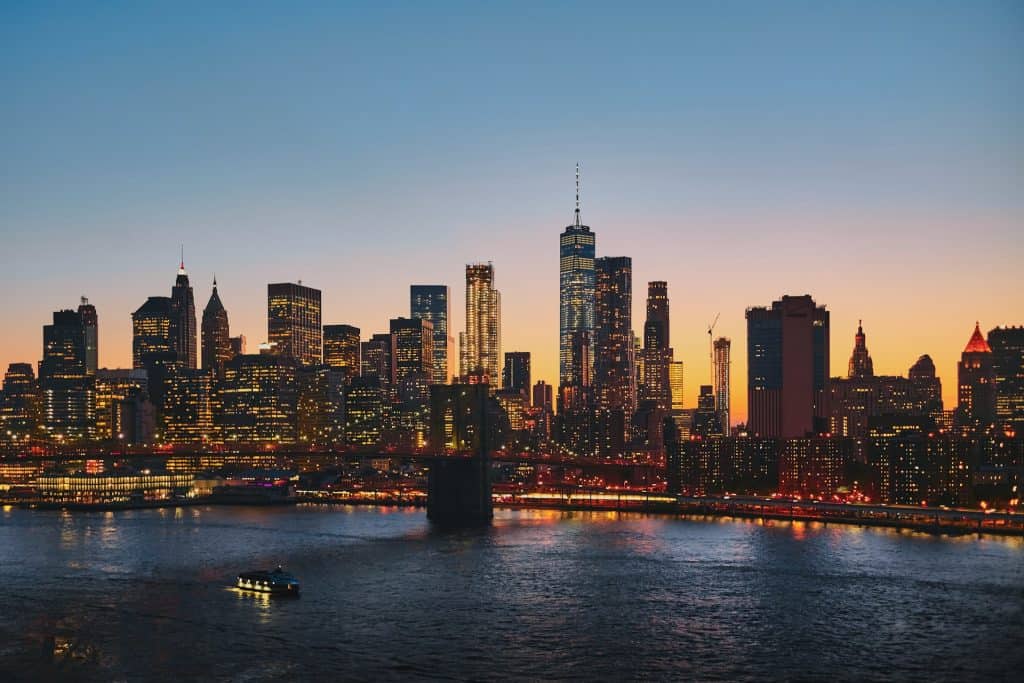
New York’s skyline is impressive from almost anywhere, but the most unforgettable views rarely come from standing in the longest observation deck line. The city looks different from a rooftop, a waterfront park, or a boat gliding along the Hudson River, especially as daylight fades and thousands of windows begin to glow. If you want more than the usual tourist photographs, it pays to look beyond the obvious landmarks. From quieter viewing spots to sunset yacht cruises, discover how to experience New York’s skyline from fresh perspectives and capture its beauty at every stage of the day.
Ditch the Crowded Observation Decks
Observation decks provide height and convenience, but peak periods can bring ticket lines, crowded windows and limited room to compose a photograph. For more ideas on planning a New York City visit, explore these helpful sightseeing tips before putting together your itinerary.
Popular attractions such as the Edge skyline experience are best booked for a timed visit, ideally early in the day or outside busy weekend hours. Before buying a ticket, check the entry rules, weather policy, and expected sunset time.
You can also see an iconic skyline from public parks, bridges, waterfront paths and ferries. These lower viewpoints place the buildings in context, with water, street life or historic structures in the foreground. A good plan might pair one elevated attraction with a ground-level location several miles away.
For a quieter New York experience, sunset yacht charters in NYC offer private Hudson River cruises for individuals and small groups. That format suits a date night, anniversary dinner, or small celebration where privacy matters as much as the view. Since the boat changes position during the cruise, familiar landmarks appear in different arrangements instead of remaining fixed behind one observation window.
Why Elevation Changes Your Perspective
Height simplifies a city. Streets become lines, parks form clear blocks of color, and rivers reveal the boundaries that are difficult to notice at ground level. This makes an elevated stop useful near the beginning of a visit. You’ll get a visual map that can help you understand where major districts sit in relation to one another.
Higher isn’t always better, however. A very tall viewpoint can flatten the skyline because nearby towers appear below you. Mid-level rooftops and terraces often preserve the layered effect people associate with classic city photographs. Ground-level overlooks can be equally effective when they provide enough distance for several buildings to fit within one frame.
Compare paid decks with free skyline viewpoints before setting your itinerary. Choose one location for a broad geographic overview and another for architectural detail. If photography is a priority, look for information about glass barriers, tripod restrictions, and indoor reflections. Dark clothing can reduce your reflection when shooting through glass, while a clean lens cloth helps remove fingerprints and haze.
Take to the Harbor at Dusk
Water creates the distance needed to appreciate an entire skyline. On land, nearby buildings often block major landmarks or force you to tilt the camera sharply upward. From a harbor, the city forms a continuous edge, and its scale becomes easier to grasp. Reflections can add color and movement without distracting from the architecture.
Dusk offers several distinct views within a short period. Before sunset, warm light picks out windows and textured facades. The sky then softens into cooler shades as building lights begin to appear. Around 20 to 30 minutes after sunset, the remaining blue in the sky often balances well with artificial light, producing photographs with detail in both areas.
Arrive at the boarding point at least 20 minutes early and confirm the exact dock before leaving your hotel. Bring a light outer layer because open water may feel cooler than nearby streets. A phone strap or secure camera strap is also useful when the boat moves. For steadier photographs, brace your elbows against your body, use burst mode, and avoid excessive digital zoom.
Plan Around the Changing Light
Check sunset time for the exact date of your visit, then work backward. For a land-based viewpoint, arriving 45 to 60 minutes before sunset usually leaves enough time for entry, security, and finding a clear position. Add more time during holidays and busy travel periods. Cloud cover matters too, so review an hourly forecast on the day instead of relying on the week’s general outlook.
Direction affects the result. A west-facing view may deliver bold sunset color, while an east-facing skyline can catch warm light on building fronts. Use a map to identify where the sun will fall relative to the city. If you’re taking phone photos, tap the brightest part of the sky and lower the exposure slightly. This preserves color and reduces washed-out highlights.
Keep the schedule flexible enough to stay through blue hour. Many visitors leave as soon as the sun disappears, creating more space just as the skyline begins to glow. Give yourself another 20 minutes, put the camera down for part of that time and watch individual windows turn on across the city. That gradual change is often the most memorable view of the evening.
The best final stop is one that lets the skyline change in front of you. Reserve enough time to see daylight fade, reflections deepen, and city lights take over without hurrying to the next attraction.

About Peter C.
Peter is a digital nomad who largely writes from Asia, Europe, and South America. Always following the "vibe," he sets up shop in hostels and AirBNB's and continues to entertain us with wild stories from life abroad. Ask him anything in our community forum. Make sure to download the AllWorld Travel Hacks FREE ebook.