So you want to backpack from Mexico City to Patagonia — or at least hit a solid five or six countries in between. Excellent life choice. Latin America is one of the most rewarding regions on Earth to travel: the food alone justifies the airfare, and the landscapes range from Caribbean coastline to Andean glaciers. But here’s the part nobody romanticizes on Instagram: the paperwork. Visa rules, entry stamps, passport validity windows, vaccination cards, photo specs — it adds up fast when you’re hopping borders every couple of weeks.
I’ve done this dance enough times to have opinions. Here’s how to keep your documents in order so you can focus on the ceviche.
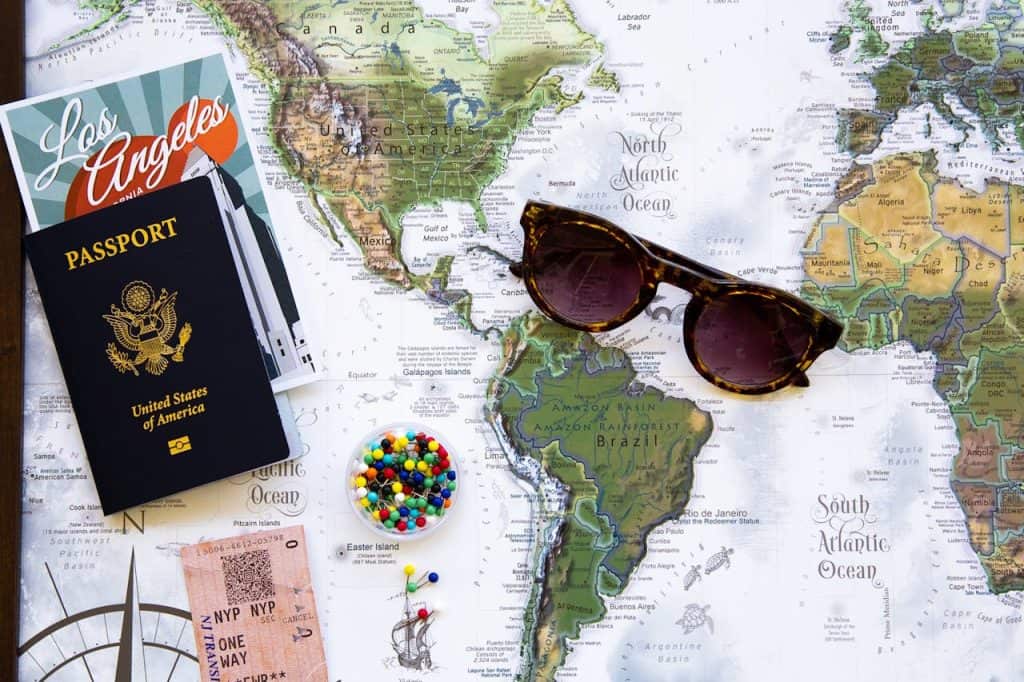
Start With Your Passport (And Check the Expiration Date Twice)
This is the single most common mistake multi-country travelers make. Most Latin American countries require your passport to be valid for at least six months beyond your date of entry — not your date of departure, your date of entry. Brazil, Colombia, Peru, Chile, and Argentina all enforce this rule, and airlines will deny boarding if your passport doesn’t meet the threshold.
If you’re planning a three-month trip and your passport expires in seven months, you’re already cutting it dangerously close. Renew before you book anything. US passport renewals currently take 6–8 weeks for routine processing, so build that lead time into your planning.
Pro tip: make two color photocopies of your passport’s data page. Keep one in your daypack and leave one with someone back home. A photo on your phone works too, but paper copies have saved me at more than one border crossing.
Visa Requirements: The Country-by-Country Reality
Here’s the good news — if you hold a US, Canadian, EU, UK, or Australian passport, most of Latin America is visa-free for tourism. But “most” is doing heavy lifting in that sentence.
Mexico: Visa-free for up to 180 days. You’ll receive an FMM (immigration form) on arrival. Don’t lose it — you need to surrender it when you leave, and replacements involve a bureaucratic detour you don’t want.
Colombia: 90 days visa-free, extendable to 180 days per calendar year. Entry is straightforward, but they do occasionally ask for proof of onward travel.
Peru: 183 days visa-free for most Western passport holders. The immigration officer decides your allowed stay at the border, so dress presentably and have your accommodation details handy.
Chile: 90 days visa-free. Formerly charged a “reciprocity fee” to US, Canadian, and Australian passport holders (more on that below) — this has been eliminated for most nationalities but always double-check before you fly.
Argentina: 90 days visa-free. Argentina also previously charged reciprocity fees but dropped them in 2016. Easy entry, but keep your entry stamp legible — you’ll need it for the exit.
Brazil: This is where it gets interesting. Brazil reinstated visa requirements for US, Canadian, Australian, and Japanese citizens in 2024. You’ll need to apply for an e-visa (eVisa) before arrival. The application requires a passport-compliant photo, and Brazil has its own specific photo dimensions (2×2 inches, white background, but with particular framing requirements). If your photo gets rejected, your entire application stalls. Save yourself the hassle and get your Brazil visa photo online before you start the form — getting the specs wrong is the number-one reason for e-visa delays.
Bolivia: Requires a visa for US citizens ($160 at the border or in advance). Bring a passport photo, yellow fever certificate, bank statement, and a copy of your itinerary. It’s one of the more document-heavy entries in the region.
The Yellow Fever Situation
Several Latin American countries require or strongly recommend yellow fever vaccination — and some require proof of vaccination if you’re arriving from a country where yellow fever is endemic.
Here’s the practical version: if your route includes Bolivia, Brazil, Colombia, Ecuador, or Peru (especially the Amazon basin regions), get vaccinated and carry your International Certificate of Vaccination (the yellow card). Even if a country doesn’t technically require it, border agents in neighboring countries may ask for it if you’ve just been in a risk zone.
The vaccine is a one-time shot that provides lifetime immunity (WHO updated this in 2016 — you no longer need boosters). Get it at least 10 days before your first entry into a risk area, since that’s when it officially takes effect.
Entry and Exit Stamps: Pay Attention
This sounds trivial until it isn’t. Some countries in Latin America have moved to electronic entry records (Chile, for instance, gives you a paper slip called a PDI card instead of a stamp), while others still stamp your passport the old-fashioned way.
The critical thing: always verify you received an entry stamp or record. If you leave a country without evidence of legal entry, you can face fines, detention, or deportation at the next border. This is especially important at land borders, which tend to be more informal than airports.
At the Peru-Bolivia border at Desaguadero, for example, it’s easy to walk across without stopping at both immigration offices. Don’t do that. Always exit one country and enter the next, officially.
Reciprocity Fees: Mostly Gone, But Verify
Reciprocity fees were Latin America’s way of matching visa fees that their citizens faced when visiting your country. Chile and Argentina both charged them for years (Chile’s was $160 for US citizens). Most have been eliminated, but policies change — particularly with shifts in government.
As of early 2026, no major Latin American destination charges a reciprocity fee for US or EU passport holders, but Bolivia’s visa fee functions similarly. Always check your destination country’s immigration website (or your own government’s travel advisory page) within 30 days of departure.
Photo Requirements: The Hidden Headache
Here’s something that catches even experienced travelers off guard: when you need a visa photo, the specifications vary by country. Brazil wants 2×2 inches with specific head-size ratios. Bolivia expects 4×4 cm. If you need to renew your passport at an embassy abroad, you’re dealing with yet another set of standards.
The days of hunting for a photo booth in a foreign city are over. You can use a free passport photo tool to ensure compliance with whatever country’s requirements you’re dealing with — snap a photo on your phone, adjust it to the right dimensions, and download a print-ready file. It’s one of those small preparations that prevents a disproportionately annoying problem.
Build a Document Checklist Before You Go
For a multi-country Latin America trip, I recommend creating a simple spreadsheet with one row per country and columns for:
- Visa required? (Y/N, plus type)
- Max stay (days)
- Passport validity requirement
- Yellow fever proof needed?
- Reciprocity fee?
- Onward travel proof required?
- Photo specs (if visa needed)
Fill it in country by country, print it out, and keep it with your documents. It takes an hour and saves days of stress.
Final Thoughts
Multi-country Latin America trips are among the best travel experiences available anywhere — the diversity of cultures, landscapes, and cuisines across this region is genuinely staggering. The paperwork is manageable if you respect it. Start early, verify everything twice, and never assume that what applied last year still applies today.
Immigration rules in Latin America shift with elections, diplomatic relationships, and global events. The single best habit you can develop: check official government sources 30 days before each border crossing, not just once at the start of your trip.
Now go plan that trip. The empanadas aren’t going to eat themselves.

About Peter C.
Peter is a digital nomad who largely writes from Asia, Europe, and South America. Always following the "vibe," he sets up shop in hostels and AirBNB's and continues to entertain us with wild stories from life abroad. Ask him anything in our community forum. Make sure to download the AllWorld Travel Hacks FREE ebook.