Based on how you decided to explore Nepal, it offers various landscapes. You can witness terraced farmlands, forests, traditional villages, rivers, and waterfalls in the lower region. Similarly, in the middle region, you can see the beautiful pastures, denser forests, and the rolling hills. Finally, the highlands present the Himalayan valleys, glaciers, icefalls, and majestic mountains. On the other hand, if you opt for aerial exploration like the Everest Base Camp Heli Tour, you get a bird’s-eye view of the entire region. The views shift dramatically and offer more authentic and raw Himalayan frames on more challenging endeavors, like Mera Peak Climbing.
Views From The Helicopter Tours
Panoramic Mountain Ranges
Unlike from the trail, you get to witness the wide, uninterrupted Himalayan grandeur in a single frame. Similarly, the layer of mountains and the shifting clouds between the ridgelines create a dramatic scene. You do not just get one face of the peak from the base camp; instead, you can see the 360-degree angle.
Glaciers and Icefalls
Helicopter Tours offer some of the most striking views of the giant glaciers and majestic icefalls. Especially in the Everest region, the Khumbu glacier appears breathtaking from the air. Similarly, this scale and complexity makes up dramatic frames for the photographers. You can see the bends and tributaries of the glacial rivers. Likewise, the crevasses stand out from the aerial views as they open into deep and narrow openings.
Mountain Valleys and Trekking Trails
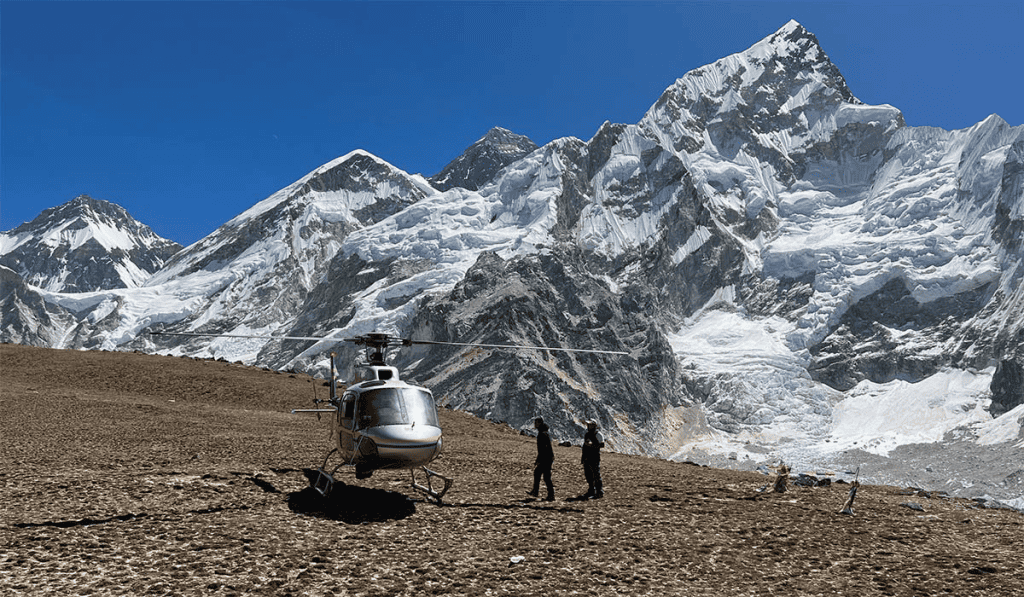
The classis routes appear like a delicate thread that traces the ascents and descents on the land. Likewise, the villages and valleys appear like small dots. For example, during the Everest Base Camp with Helicopter Tour, you witness the same paths and valleys that trekkers walk while trekking to the EBC. The contrast between the terraced farmlands, forests, and the pearly white mountain looks truly dramatic.
Cloud Formations
Flying above some of the tallest Himalayas in the world allows you to witness the sky as close as one can. Thus, the villages and landscapes are covered by a white, soft blanket. The towering peaks look like they are floating amidst the clouds. The shift in light and the changing patterns in the sky provide magical sights. It is one of the most peaceful yet dynamic experiences during the tour.
Monasteries and Temples
Some of the most religiously and culturally significant sites appear quiet as they nestle within dramatic landscapes. For example, the area of the Tengboche monastery stays surrounded by forest and mountains, as its golden roof stands out. Similarly, you can see the small gompas, temples, and other prayer sites scattered along the ground. The colorful prayer flags and chortens add colorful visuals. The stone temples in the lower and middle villages blend into the villages.
Water Bodies
From a helicopter, Nepal’s rivers and lakes look truly breathtaking, almost like scenes from a movie. You can see rivers flowing through the valleys like long silver ribbons twisting and turning across the rugged land. In places like the Dudh Koshi River the rushing milky water stands out against the dark rocks.
In contrast, the high mountain lakes feel calm and peaceful. They look peaceful and divine as they reflect the surrounding mountains. Similarly, their deep blue-turquoise-green color creates a dramatic contrast and stands out in the snow.
Waterfalls look like thin white lines flowing down steep cliffs, and you often don’t notice them until you see them from a helicopter. When you look at everything together—the rivers, lakes and waterfalls—they add movement, color, and life to the mountains.
Views When Climbing Peaks
The view keeps changing with every step: valleys look smaller, glaciers spread out more and the sky feels much closer. On clear days, the scale of it all feels huge with one mountain after another rising like frozen waves.
Ridgewalk Views and Narrow Paths
The peak climbing routes follow small ridges and steep drops. So, climbers can see wide sights of the glaciers and beautiful blue skies. As they gain altitude, blankets of cloud appear right beneath you, making it feel like you are floating. Likewise, the light and shadow change throughout the day and paint the mountains in different colors.
High Camps and Their Surroundings
Climbers have to stay across multiple camps on the way to the summit. Similarly, these tents are strategically placed on the snowy plateaus that offer sweeping views of the other neighboring peaks. They reveal the scale of the climbing paths, as glaciers and icefalls stretch below. Likewise, the remote environment, as climbers stay between the land and the sky provides a sense of serenity.
Valleys and Deep Drop-Off Views
As climbers go higher on peaks, the valleys below start to look more dramatic. Similarly, deep gorges drop down beneath the cliffs, with rivers winding through them and small villages looking tiny from above. It can look like there’s one world below and another above, stacked on top of each other. As the clouds move the views keep changing, making the whole experience feel unreal.
Glaciers Landscapes
During climbs, glaciers become one of the most noticeable parts of the landscape, especially in places like the Khumbu region. From higher camps, climbers can look down on wide stretches of ice filled with deep cracks. Likewise, they can witness the frozen river-like paths and tall blocks of ice. In the sunlight the ice often shines with a blue glow, making it look like a frozen winterland.
360° Himalayan Horizon
From the summit of a major peak in Nepal, the most amazing part is the full 360-degree view of the Himalayas. You can see in every direction—long ridgelines, tall snowy peaks and deep valleys. There’s nothing higher around you, so the view feels completely open and clear.
On clear days the layers of peaks and the way the land curves make everything feel huge and almost unreal. Similarly, the peaks like Ama Dablam, Lhotse, and many more sharply rise above the ridges and glaciers. The valleys appear partially hidden by the cloud and can be seen as small dots sometimes.

About Peter C.
Peter is a digital nomad who largely writes from Asia, Europe, and South America. Always following the "vibe," he sets up shop in hostels and AirBNB's and continues to entertain us with wild stories from life abroad. Ask him anything in our community forum. Make sure to download the AllWorld Travel Hacks FREE ebook.