A hunter’s greatest asset is the ability to disappear into the landscape. Yet the land rarely cooperates with a single strategy. What works in dense hardwoods fails spectacularly in open fields. What conceals you in marsh grass leaves you exposed on snow-covered hillsides.
True proficiency in hunting is defined not by gear alone, but by the adaptability of your concealment tactics to the specific demands of terrain. Effective concealment is less about what you put on and more about how you think and move within a given space.
This article provides a strategic breakdown of concealment methods across five common hunting landscapes, shifting the focus from generic hiding to intelligent environmental integration.
The Core Principle: Concealment Over Comfort
In critical hunting scenarios, such as ambush positions and spot-and-stalk approaches, remaining undetected takes precedence over physical comfort. Your priority is invisibility, not warmth.
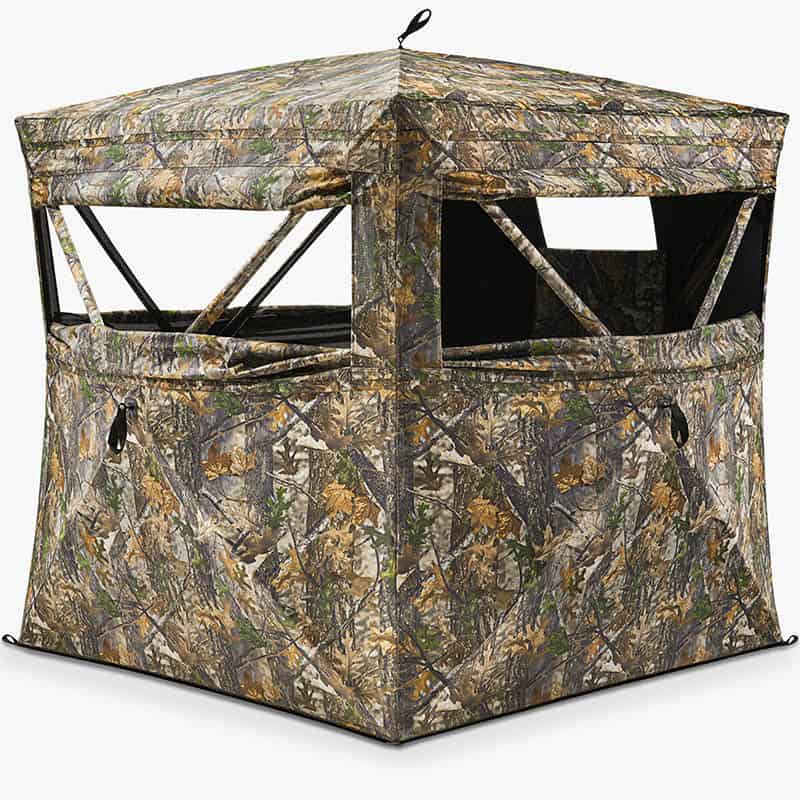
Modern tools, such as portable hunter blinds, serve a specific purpose. They provide visual concealment and break up the human silhouette effectively. However, they do not provide inherent warmth or wind protection. Success depends on pairing these concealment tools with appropriate personal gear for the elements you’ll face.
Understanding this distinction prevents unrealistic expectations in the field and ensures you prepare properly for both concealment and environmental conditions.
1. Open Fields & Agricultural Land: Mastering the Void
Open terrain presents the supreme challenge for hunters. Limited cover and long sight lines mean exposure from multiple angles simultaneously. This landscape demands precision in timing and movement.
Key Challenges
Maximum exposure from all directions creates vulnerability. Judging distance for a game becomes difficult without reference points. Any movement you make is instantly magnified across the flat landscape, visible from hundreds of yards away.
Strategic Concealment Tactics
Use topography to your advantage. Ditches, fencerows, and slight depressions become highways for concealed movement. Even a six-inch drop in elevation can hide your profile from distant games.
Time your moves carefully. Move only when animals are feeding with their heads down. Use slow, deliberate crawling rather than walking. Each advance should be measured in yards, not miles.
Embrace unnatural elements. Round bales, farm machinery, fence posts, and abandoned equipment all serve as masking elements. Position yourself to use these structures as visual breaks between you and your quarry.
Practical Takeaway: In open terrain, your clock is dictated by the animal’s behavior. Patience and using the slightest elevation change prove more valuable than speed.
2. Forests & Wooded Areas: The Illusion of Cover
Dense timber creates a deceptive environment. More cover often leads to increased noise and movement alerts. Game animals in forests rely heavily on sound detection, making woods hunting a test of noise discipline.
Key Challenges
Noise discipline becomes critical. Snapping twigs and rustling leaves telegraph your presence instantly. Managing your silhouette against a complex, shadowy background requires constant awareness. Limited sight lines mean you must adjust expectations about detection distances.
Strategic Concealment Tactics
Background matching is essential. Always pause with a solid tree trunk wider than your shoulders directly behind you. This breaks your outline and prevents backlighting.
Move within shadow lanes. Travel through shadowed areas, not sunlit patches. Deer and elk key on movement in bright spots first.
Use the slow-step method. Place each foot carefully, rolling from heel to toe. Test for sound before shifting your full weight. This technique reduces noise by 80% compared to normal walking.
Practical Takeaway: Move at a pace that allows you to see and listen ahead. In the woods, you are often heard long before you are seen.
3. Marshes & Wetlands: The Elemental Game
Wetlands present unique challenges. This landscape is defined by water, vertical vegetation like reeds and cattails, and open sight lines over flats. Wind exposure is constant with no natural windbreak.
Key Challenges
Movement through water is inherently loud and creates visible disturbances that ripple outward. Finding stable, elevated shooting positions becomes difficult. Exposure to wind carries your scent across vast distances with no natural barrier to interrupt it.
Strategic Concealment Tactics
Go vertical with natural vegetation. Cattail stands and reed clusters break your outline effectively. Construct simple, natural blinds from available vegetation, weaving it into existing growth.
Understand water currents and tides when hunting coastal marshes. Plan entry and exit routes that minimize disturbance. Account for water level changes that might strand you or expose your position.
Manage wind strategically. Since natural wind protection is scarce, position yourself so your scent carries away from expected game approaches. Secure all loose gear to prevent noise from flapping fabric or clanking equipment.
Practical Takeaway: Your approach route is as important as your final position. Plan your wade to use channels and deeper water to mask movement sounds.
4. Brush-Heavy & Transitional Zones: The Edge Effect
Thick cover, like CRP land, clearcuts, and field edges, creates high-tension hunting. Game moves between bedding and feeding areas through these corridors, often at close range.
Key Challenges
Visibility is extremely limited, sometimes to mere yards. Moving quietly through dense material becomes physically demanding. The high probability of a startling game at close range means every step carries risk.
Strategic Concealment Tactics
Master still-hunting technique. Move one step, then stop and scan for two to three minutes. Focus on listening for movement in the brush rather than trying to see animals.
Look low for game trails. Animal tunnels through the brush often run below eye level. Deer and hogs use these corridors consistently.
Use partial concealment effectively. Sometimes, breaking up your face and upper body with a mesh facemask while sitting against a large bush proves more effective than attempting complete invisibility.
Practical Takeaway: In thick brush, hunting becomes a tactile listening exercise. If you can see far, you’re in the wrong spot.
5. Snow-Covered & High-Contrast Environments
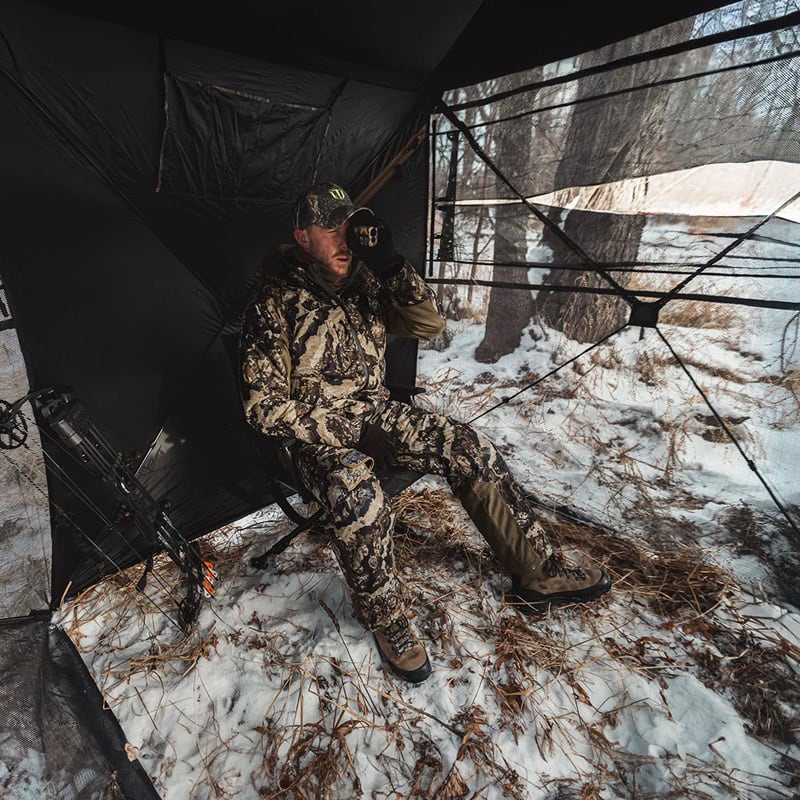
Snow-covered landscapes amplify every mistake. Movement, silhouette, and color mismatches become glaringly obvious against the white canvas.
Key Challenges
Your dark silhouette is magnified against the snow. Tracks reveal not just your presence but your entire route and timing. Sound carries farther in cold, still air, making even careful movements audible.
Strategic Concealment Tactics
Break your silhouette deliberately. Use rocky outcroppings, dark tree trunks, or the shaded side of terrain features to disrupt your outline against the snow.
Practice track awareness. Use existing game trails when possible. When crossing open snow, step in existing tracks, yours or an animal’s, to minimize a new sign that advertises your presence.
Time moves strategically. Move during snow flurries or wind that obscures vision and covers both sound and scent. Heavy snowfall erases your tracks within hours.
Practical Takeaway: In snow, you are not just hiding from the animal’s eyes, but from the story you write on the landscape with your tracks.
Conclusion: The Adaptable Hunter
Landscape-specific concealment marks the difference between a novice and a thoughtful hunter. It is a dynamic skill requiring constant observation and adjustment before and during the hunt.
Proper concealment serves as a cornerstone of ethical hunting. It leads to cleaner, more responsible harvests by increasing the likelihood of an undetected approach and accurate shot placement. When the game doesn’t detect your presence, you control the encounter rather than reacting to a spooked animal.
Study your next hunting landscape not just for game signs, but for its inherent concealment opportunities and liabilities. The environment is not an obstacle to overcome, but a framework to work within.
Mastery lies in becoming a student of the terrain. Learn to read the land as well as you read animal behavior, and your success rate will reflect that knowledge.

About Peter C.
Peter is a digital nomad who largely writes from Asia, Europe, and South America. Always following the "vibe," he sets up shop in hostels and AirBNB's and continues to entertain us with wild stories from life abroad. Ask him anything in our community forum. Make sure to download the AllWorld Travel Hacks FREE ebook.