
People often refer to the Camino de Santiago as a trail, but it’s actually a sprawling network and pilgrims often have varied experiences depending on which they choose. There are options coming in from either direction, so how do you choose from the best Camino de Santiago routes?
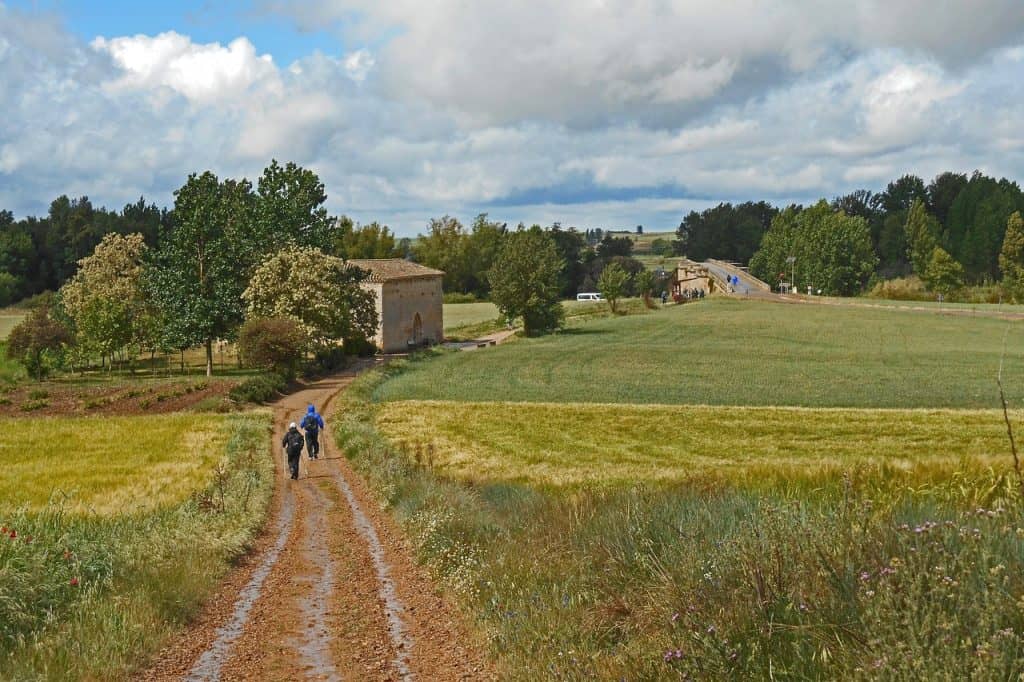
The classic Camino Francés
The most iconic route is Camino Francés. It’s vast, has a vibrant pilgrim culture, and has excellent infrastructure that connects the Pyrenees to Santiago. Starting in a different country (France) has a certain ring to it, but many join in for the final stretch and just walk the Way of Saint James from Sarria – it still captures the spirit of the trail (misty Galician forests and stone villages) but without the month-long commitment. For a social community and a reliable experience, this is a great choice.
- Difficulty: Long, rolling hills, nothing technical.
- Duration: 30+ days, or 7 days from Sarria.
A riverside stroll along the Camino Portugués
If you’re a casual walker without much experience, Camino Portugués is a deeply scenic alternative that manages to stay both rural yet easy. Because it’s on the Atlantic coast, you get a lot of beaches, rivers, and greenery. When starting from Lisbon, you again cross a national border during this long trek. But, you can also start on the border, committing to just the final leg from Tui to Santiago. This is again a way to get the certificate but only commit one week to the trek rather than four. It’s fairly flat, relaxing, and has lots of history.
- Difficulty: Easy (long but accessible terrain).
- Duration: 25 days from Lisbon, 6 days from Tui.
Coastal Camino del Norte
For those wanting salt air and no dusty plains, Camino del Norte is the most rugged of the coastal options as it track the Bay of Biscay in Northern Spain. This section is very cultural, passing both Basque and Celtic regions, and is incredible for food, like in San Sebastián and Bilbao. They have high-end gastronomy, stunning architecture, the sea, and elevation.
- Difficulty: High (constant elevation changes).
- Duration: Approximately 35 days.
The challenging Camino Primitivo
The Camino Primitivo is the original path that King Alfonso II took in the 9th century. It’s therefore the oldest route in existence, and it’s deeply wild. This is a high-altitude trek through the mountains of Asturias – it’s one people take to push them to their mental and physical limits. You’ll get solitude and adversity, but also incredible views, making it one of the best Camino de Santiago routes for experienced hikers with only two weeks of vacation time.
- Difficulty: Very High (mountain ascents).
- Duration: 14 to 15 days.
Short and sweet on the Camino Inglés
The Camino Inglés was the path for British and Irish pilgrims who arrived in Spain by sea at the ports of Ferrol or A Coruña. It’s a compact, verdant crossing of the Galician countryside and is characterized by maritime heritage and green valleys. This is for those without much free time, who are already located in the British isles, but want to earn their official Compostela certificate.
- Difficulty: Moderate (shorter daily stages).
- Duration: 5 to 6 days.
There are many more routes that couldn’t be included in this list, including starting from Southern Spain where you can experience Moorish history and an extremely long, hot trail. Northern Spain is situated in a place that is on the verge of where Europe begins to get hot and mountainous again, meaning you many landscapes, climates and cultures to choose from.

About Peter C.
Peter is a digital nomad who largely writes from Asia, Europe, and South America. Always following the "vibe," he sets up shop in hostels and AirBNB's and continues to entertain us with wild stories from life abroad. Ask him anything in our community forum. Make sure to download the AllWorld Travel Hacks FREE ebook.


